Years before either county voted on anything, the state exempted the buyer's equipment from sales tax and now they're stalling the one bill that might slow these projects down. The receipts are on this page.
Updated September 15, 2026
55a
Stop 5 · the head start
What the state already gave away
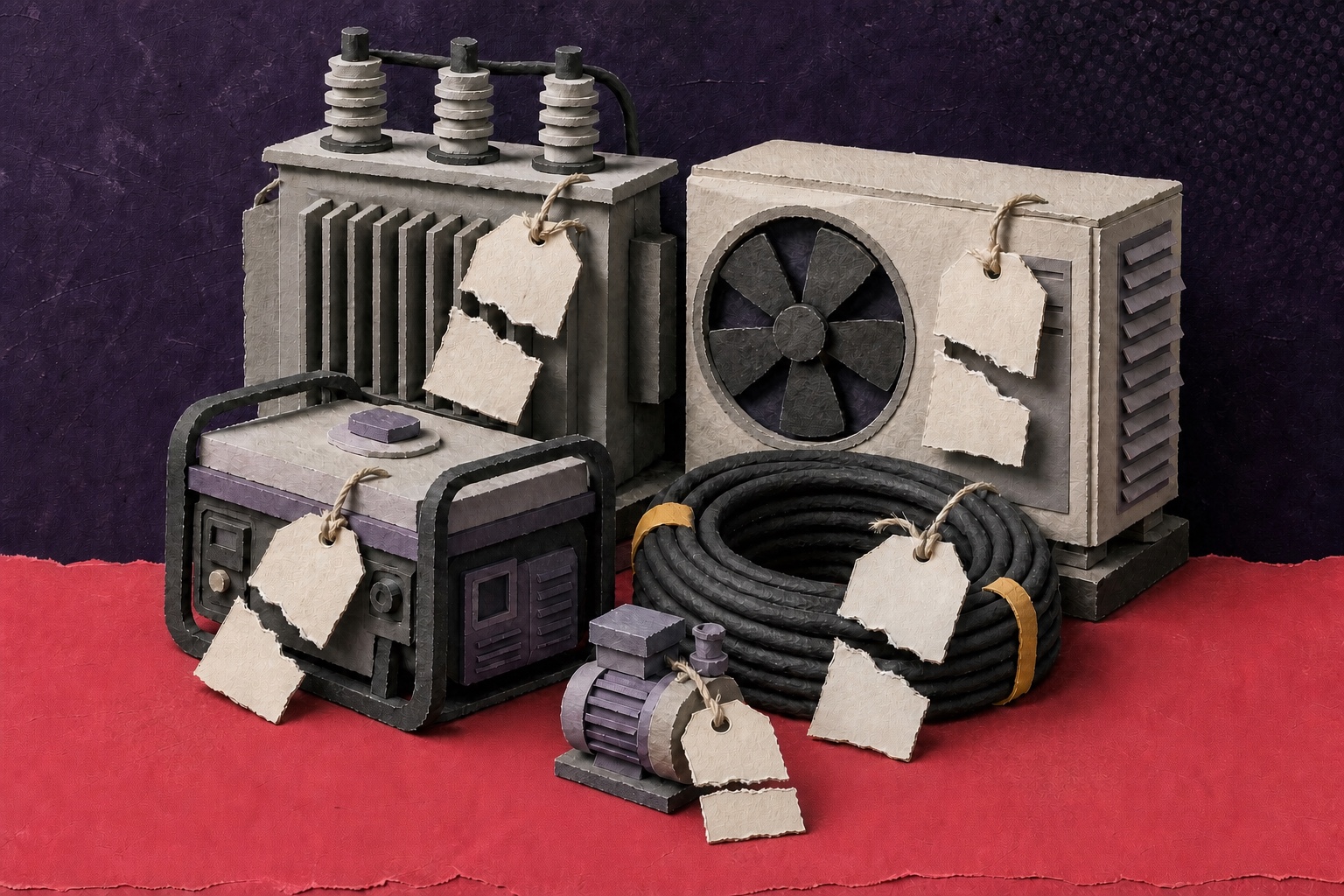
General Statute 105-164.13(55a) exempted qualifying data centers from sales tax on their electricity and on their support equipment: the substations, generators, transformers, battery backups, and chillers that make up most of what these projects actually buy. That held for a decade, until this year's budget took back the electricity piece and left the rest.
When the legislature last rewrote this exemption in 2015, its own fiscal staff projected it would cost about $4 million a year. The real number is already about a dozen times that: 37 projects have claimed the exemption so far, worth an estimated $45 to $57 million a year. And that's before the current wave of proposals breaks ground.
You may have heard this got repealed in the 2026 budget. Here's the part that's true: the budget repealed the exemption on electricity, and that part is real and immediate. It applies to electricity billed from the day the budget became law, existing data centers included. Here's the part that is still exempt: the equipment, the software, and the construction materials, all still on the books. At the signing, Governor Stein said "you and I will no longer be subsidizing their energy consumption." True, and it's about a third of the annual giveaway. To be fair, he has since proposed phasing out the rest by 2033. That would take the legislature. A bipartisan House bill that would repeal the whole exemption, H1213, hasn't gotten a committee hearing.
today, per year
at full buildout, per year
repealed (electricity): ~$20M now, ~$160M at buildoutstill exempt (equipment + software): $25–37M now, $205–308M at buildout
all figures: NC Commerce Department estimates, via WUNC · both bars drawn to the same scale, annual dollars only · "buildout" means every planned project gets built; the buildout columns together come to $365–468M a year, roughly Commerce's ~$450M projection
Not on the chart: $1.5 to $2.3 billion. That's the sales tax the planned projects would skip on construction materials alone. One-time money, not annual, which is why it gets its own box. The repeal didn't touch it.
One more thing a state exemption decides for you: it takes the county's cut with it. The state's share of sales tax is 4.75 cents on the dollar, and local governments typically collect about 2.25 more. When Raleigh exempts a purchase, both parts vanish, and no county commissioner gets a vote on it. Data centers do still pay local property tax on their buildings and equipment, unless a county signs that away in its own incentive deal.
And there's no end date. Commerce counted 32 states with a version of this exemption. Twenty-five of them phase it out or let it expire. North Carolina is one of seven where it runs in perpetuity, until some legislature decides otherwise.
Correction, July 31, 2026: an earlier version of this page compared the repeal's first-year value against a projection for all the exemptions combined at full buildout, and made the repealed slice look about seven times smaller than it is. That mixed two different yardsticks. Compared year to year, the repeal covers about a third, and the numbers above are the corrected ones.
There is a bill. Senate Bill 730, the Ratepayer Protection Act, passed the House 69 to 44 on June 3, and its first part contains genuinely good provisions: real protections to keep customers over 100 megawatts from shifting their costs onto everyone else. Credit where due. Then it went to Senate Rules, which is where bills go to sit quietly, and it's been sitting since.
Now the fine print. When this bill wants teeth, it has them: the section banning foreign adversaries from owning data centers carries fines of $1,000 a day and court-ordered sale of the land. The ratepayer sections don't get that treatment. The contract terms are required, but they're written as goals, "designed to" protect other customers, with no penalty attached. The site study a county collects doesn't have to pass any standard; it just has to exist. And the check on whether a data center's promised demand ever shows up is a few lines in a utility report. Good provisions, light enforcement.
Then Section 10. It says no dispatchable power plant over 100 megawatts can retire until a 1,000 megawatt nuclear facility is certified in the state. Duke's actual nuclear plan is 600 megawatts of small modular reactors, first unit hoped for 2036, at a site it is already permitting next door to Belews Creek. Nothing on the drawing board meets the bar. As written, the Ratepayer Protection Act keeps the coal plant running. Who benefits from that mismatch?
Two more holes. The protections kick in at 100 megawatts, so a project designed at 99 escapes entirely. And anything approved before the bill becomes law is grandfathered outside its protections. That hole stopped being hypothetical on September 14, when Stokes approved Project Delta's rezoning while SB 730 was still sitting in Senate Rules. Forsyth's denial took Iron Spur out of the race on July 30, at least for now. Delta finished it. Every week a bill like this waits in Rules is a week somebody else gets to file ahead of it.
JUN 3 2026Passes the NC House, 69 to 44.
JUN 2026Referred to Senate Rules.
TODAYStill there. In Rules since the June 3 House vote.
100 MW
where the protections start
99 MW
a design that escapes all of it
drawn to scale: the difference is one megawatt, one percent · below the line, none of the bill applies
What should the state do instead? That's stop 6 of this guide: six proposals, with receipts from states already doing them.
 ← the whole picture