Stop 3 · the power bill connection
A utility paid for building
Project Delta · Stokes
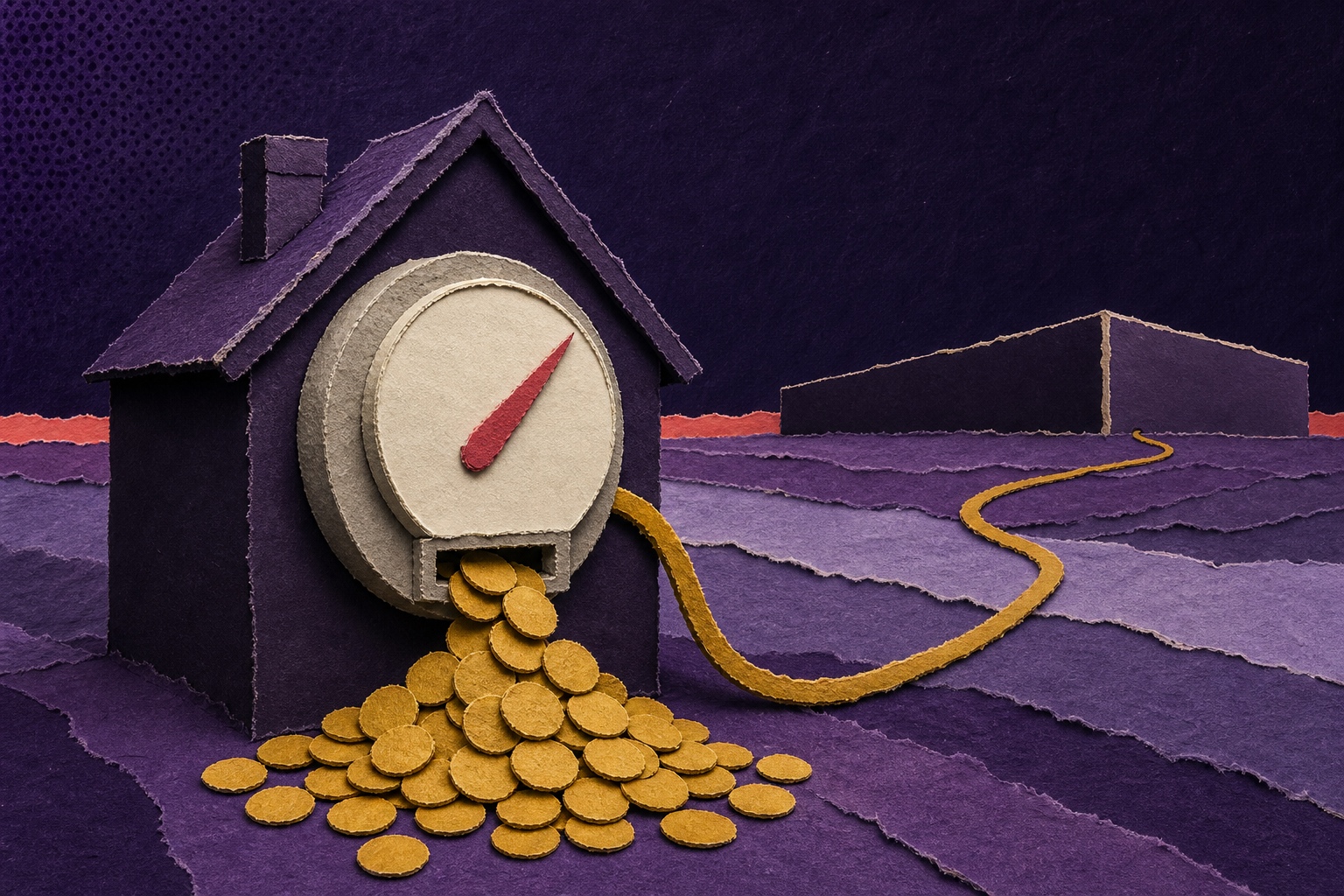
Here's the part that connects to the bill in your kitchen drawer. Duke Energy doesn't really make its money selling electricity. It makes money building things, and regulators guarantee it a return on what it builds. If that sentence sounds strange, the Power Bill field guide walks through the whole system. This page only needs one piece of it.
Now add a request reported at up to 2,000 megawatts. Stokes rezoned the land for it on September 14, which settles where the campus can go and settles nothing about where the power comes from. The filings themselves never state that figure, which is its own story, but a customer that size justifies new substations, new transmission, new generation... a whole new round of guaranteed-return construction. And the Duke connection isn't speculation: the developer told FOX8 in June that it is working with Duke Energy to finalize power delivery. It's also part of why Belews Creek, once slated to retire, is now planned to run to 2035 and possibly as late as January 1, 2040, with small modular reactors named as the stated replacement. The demand forecast keeps the coal plant alive, and the buildout it justifies goes into the rate base you pay for.
Stop 3 · continued
Your bill holds the risk
And if the tenant never signs? The forecast deflates, but the concrete doesn't. The capacity doesn't get un-built, and rate cases spread its cost across everyone's bills. Duke's return is guaranteed by law, and your bill is where the difference lands. Who benefits from that mismatch?
The requestA reported 2,000 MW customer appears in the demand forecast.
→
The buildoutDuke builds substations, lines, generation. Its return is guaranteed by law.
→
Your billThe rate base grows, and rate cases spread it across everyone.
and if the tenant never signs
The middle box already happened. The return is still guaranteed, and the bill it lands on is still yours.
There's a bill for exactly this
This risk is what Senate Bill 730 is aimed at. It would require every data center to sign a power contract with terms built to keep these costs off your bill: minimum billing so Duke recovers what it spends to serve them, cost recovery that runs the full life of the deal, and protections for the rest of us if the project defaults or walks away.
Two catches. It only covers contracts signed after it becomes law, so a project that gets its deal done first stays outside it. And it has been sitting in Senate Rules since June. The full story on the stalled bill is ahead at stop 5.
how the machine works: Your Power Bill, the field guide →
Sources: WUNC: Belews Creek, originally set to retire at the end of 2035, could run as late as January 1, 2040 (Oct 2025) · Data Center Dynamics on Duke extending coal plant lives for data center demand · Duke's early site permit application for SMRs near Belews Creek (Dec 2025) · FOX8: developer working with Duke to finalize power delivery (June 2026)
 ← the whole picture