What a hyperscale data center actually is, what real ones look like, and how big the two fought over here would be, in numbers you can check.
Updated September 15, 2026
01
Stop 1 · the thing itself
A warehouse for computers
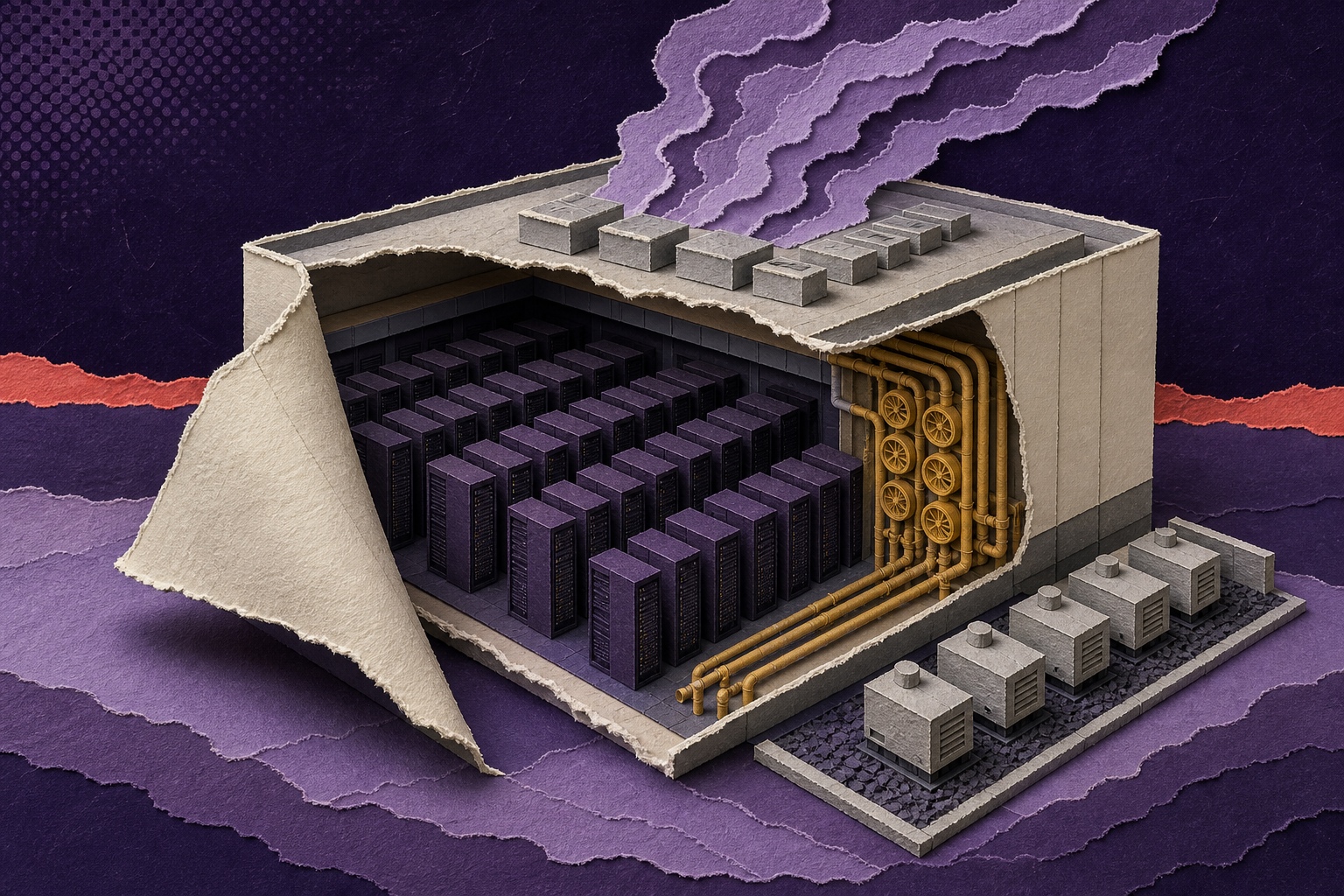
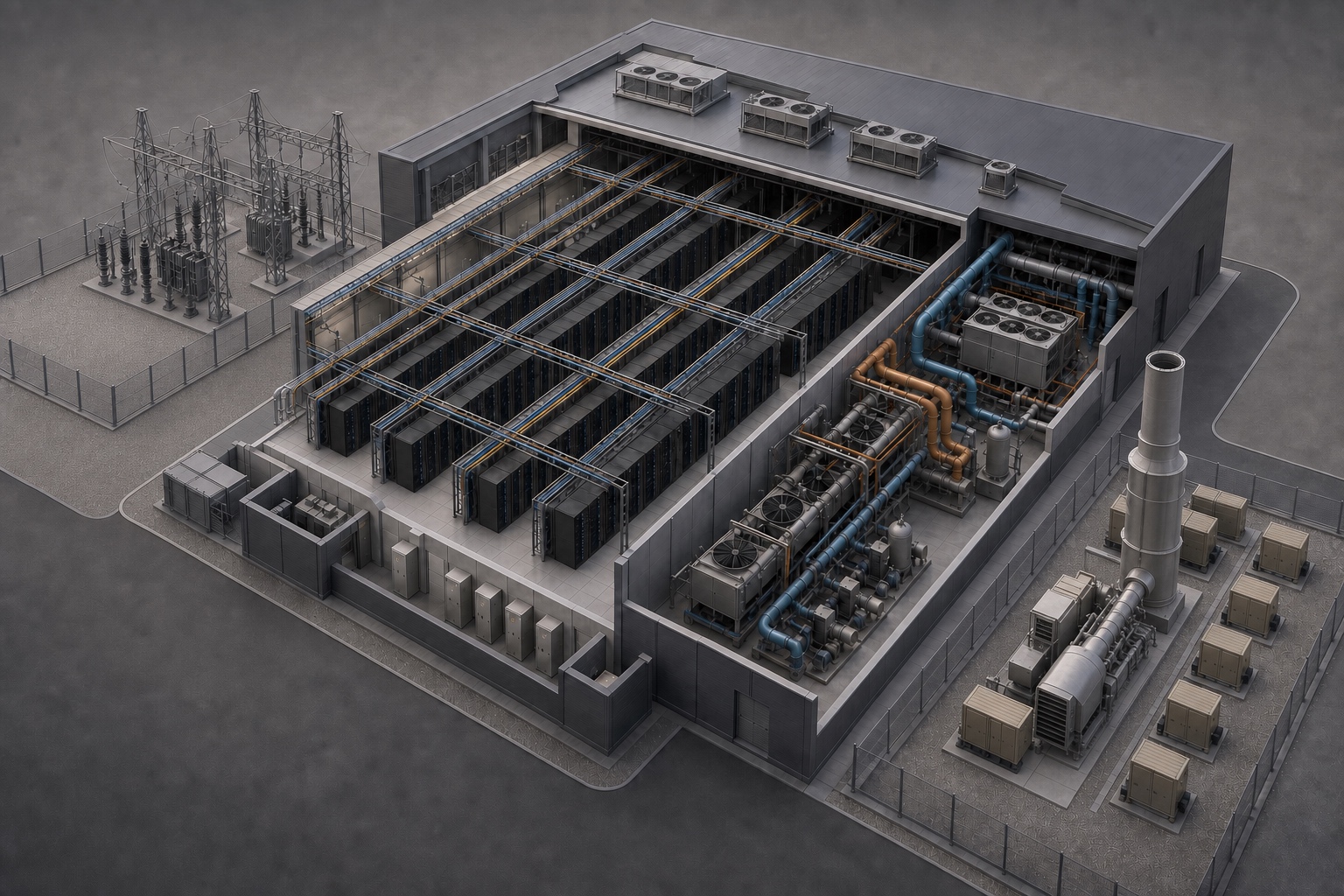
Strip away the branding and a hyperscale data center is a warehouse for computers: long windowless halls of server racks, running around the clock. The computers are the easy part. Everything around them is what shows up in your county. The racks throw off enormous heat, so a cooling plant runs constantly... and even a closed-loop system needs fresh water to top off what it loses. The site needs its own electrical substations, because it draws more power than a small city. And because the servers can never go dark, the back lot fills with rows of diesel backup generators and the fuel tanks to feed them.
Jobs deserve a straight answer too. Building one of these takes a small army for a couple of years. Running one doesn't. Project Delta's developer projects 250 to 500 permanent jobs at full buildout, from its own website, and pitched $40 million a year in tax revenue on TV. Those are their numbers, on the record. Stop 6 comes back to them.
Why is this happening now, here? The AI buildout has companies racing to reserve land, power, and water ahead of demand they're forecasting, not demand they have. Some of these projects get built for a specific tech company. Others are built on spec: the building is real, the customer is a forecast. Neither project in this district has ever had a publicly named tenant. Hold onto that fact. It decides who ends up paying for the power.
SubstationServer hallsCooling plantRooftop air handlersGas turbine + exhaustBackup generators
an illustrative composite of typical hyperscale components, not the Project Delta site plan · the gas turbine is the kind of on-site "bridge generation" some projects run while waiting on grid connections
About those turbines and generators. A campus this size can want more power than the grid can deliver on day one, so the industry has a workaround it calls bridge generation: run your own gas turbines around the clock, sometimes for years, until the utility catches up. At Project Delta's public information meeting in July, the "use and duration of on-site and temporary bridging generation" was one of the topics neighbors raised, by the applicant's own written account, and Clean Water for North Carolina reports the developer has said it plans to run gas generators around the clock until it can connect to Duke's grid. And when the bridge era ends, the machines don't leave. They stay as the backup fleet: kept fueled, kept ready for outages, and fired up on a regular testing schedule. Stokes's proposed conditions already assume that future, limiting generator testing to weekday business hours and exempting actual emergency operation from the noise limits entirely.
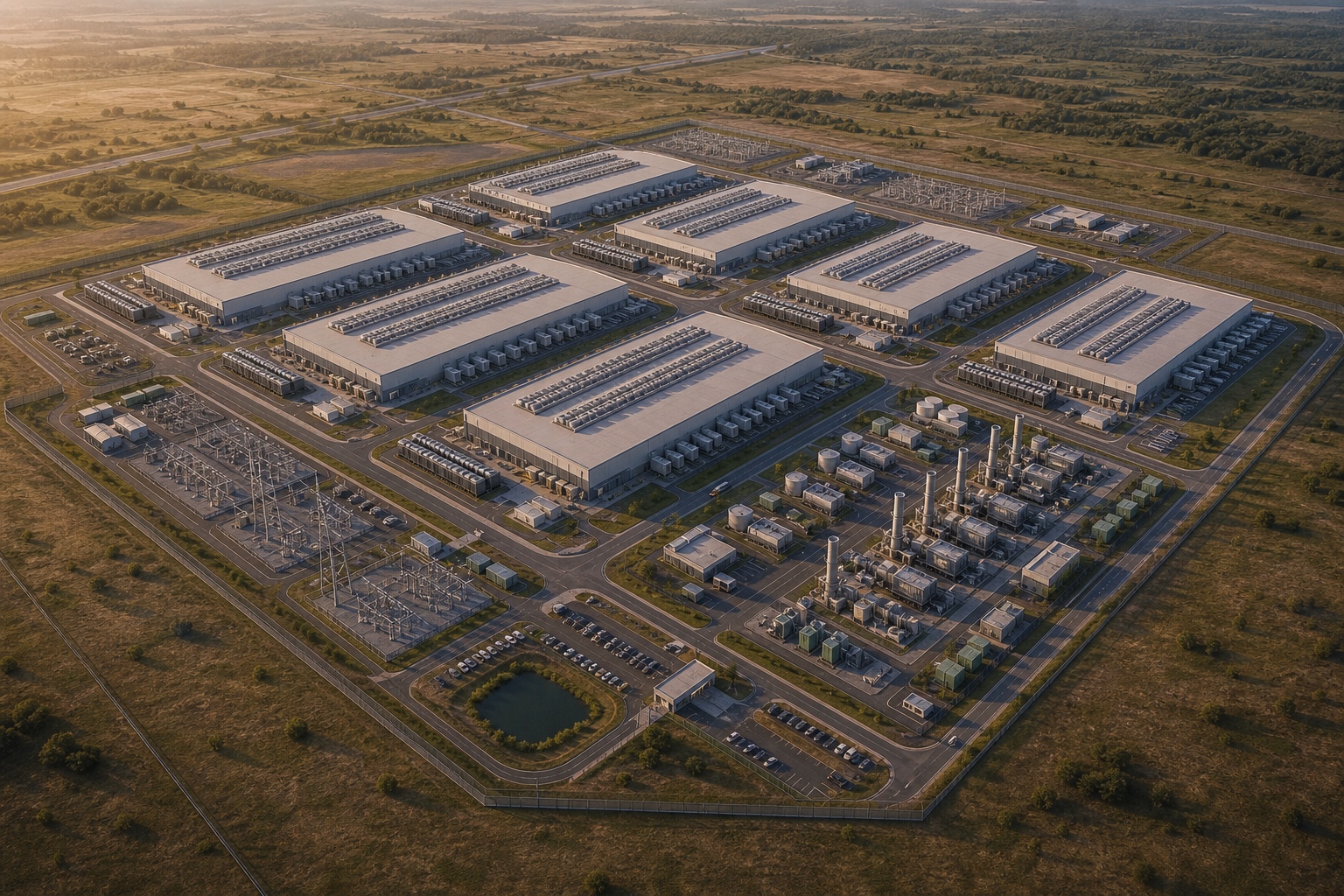
Now zoom out. A full campus repeats that building over and over, and brings its own power infrastructure with it:
SubstationData hallsBackup generatorsFuel + water tanksTurbine generatorsRetention pond
an illustrative rendering of a typical multi-building campus, not either local site plan · the Stokes application allows a campus of facilities; the Forsyth plan shows three buildings
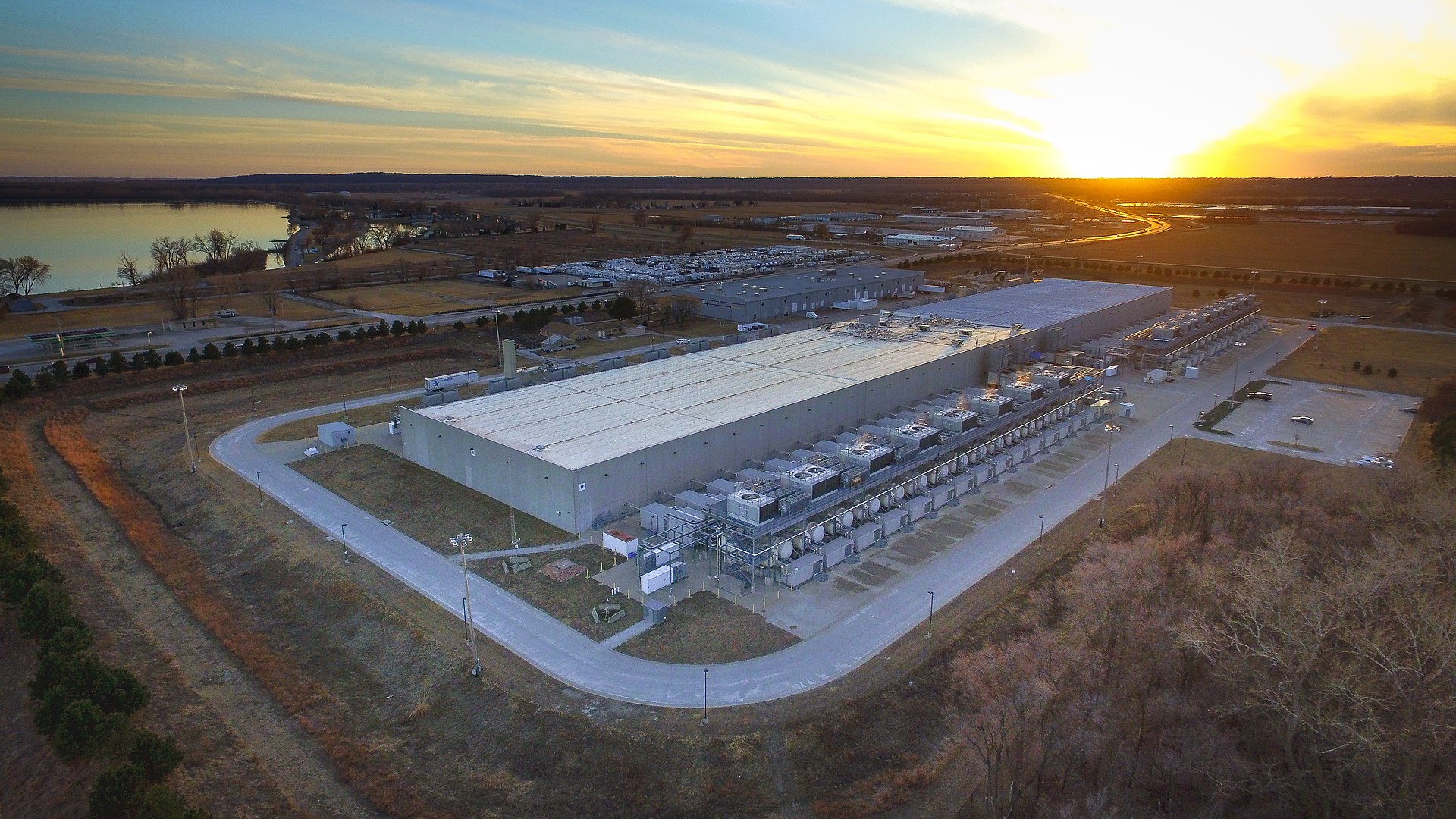
And here is a real one, because these aren't hypothetical anywhere else. This is Google's data center outside Council Bluffs, Iowa.
The newest builds are bigger than that one. In southwest Memphis, xAI's Colossus runs in a converted appliance factory, powered in part by dozens of on-site gas turbines that ran for months without air permits, in a neighborhood that already carried some of the highest asthma rates in Tennessee. The permit fight there is still going.
xAI's Colossus campus · photo: xAI · the rows of machinery along the building are the power and cooling hardware, the part the neighbors live next to
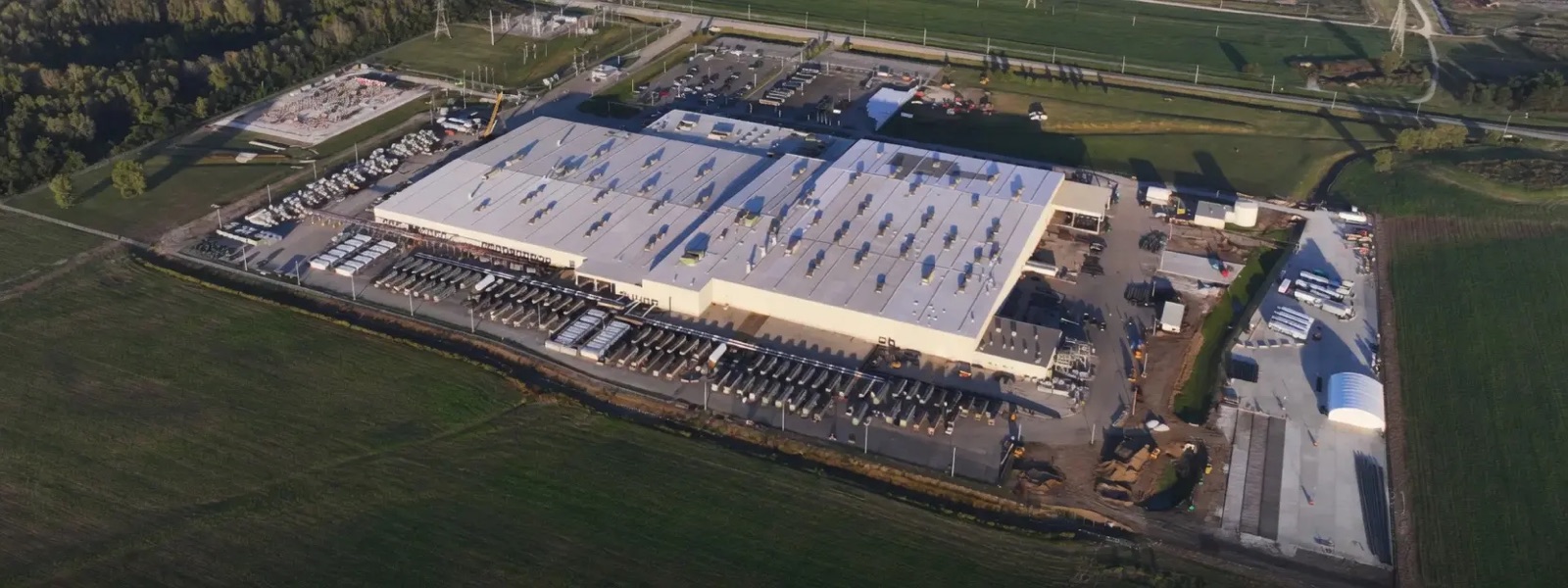
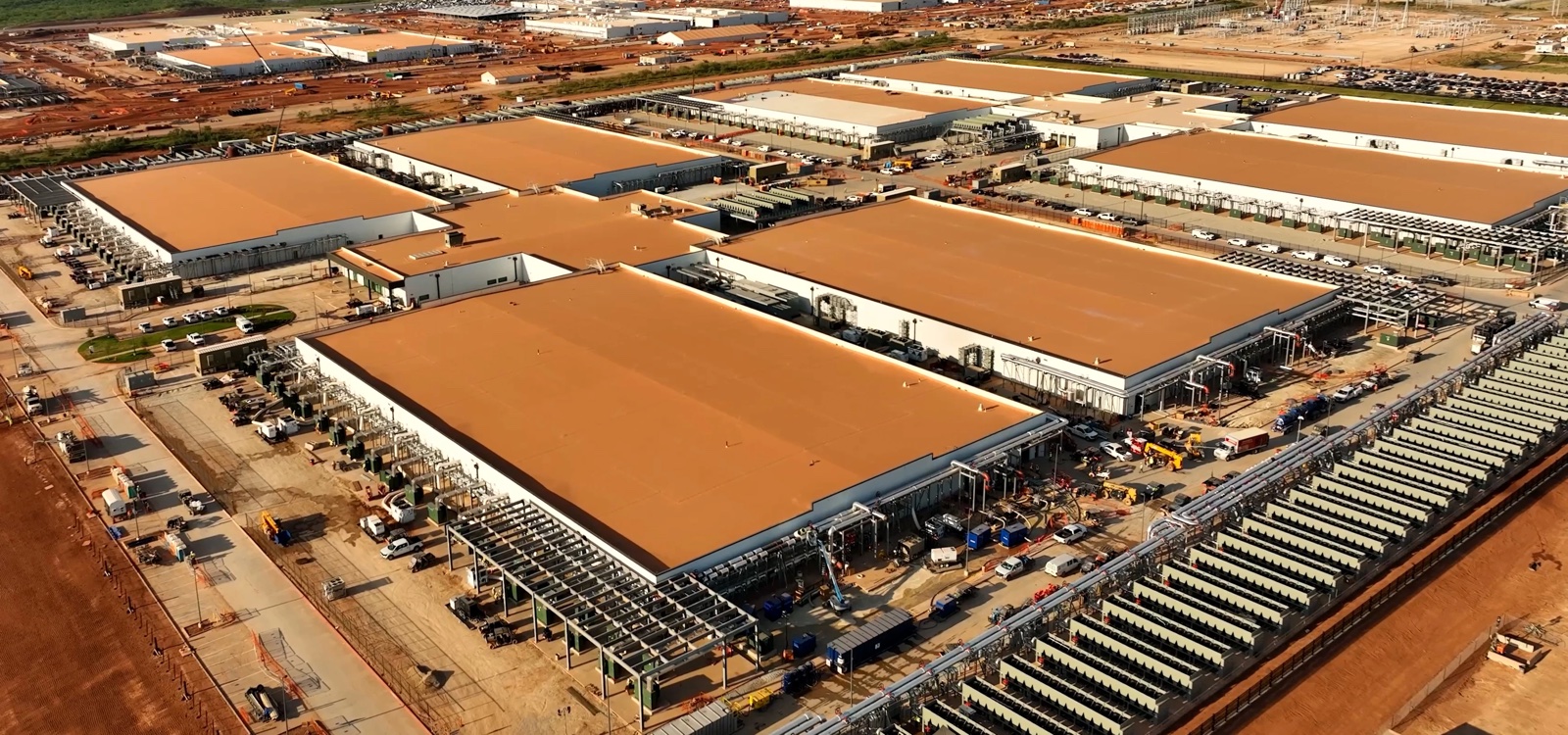
Outside Abilene, Texas, OpenAI's first Stargate campus covers about 1,100 acres, with roughly 4 million square feet of buildings. This is what it looked like mid-construction:
Stargate campus under construction, Abilene, Texas · photo: OpenAI
Project Delta's application is in this class. What it's like to live near one is stop 2.
Sources:
90%
Stop 1 · the scale
How big is big, in numbers you can check
Project Delta · Stokes
Start with the land, because the land is in the filing. The application puts the site at 1,848.741 acres, with 998 developable. Walnut Cove, the town next door, covers 2.56 square miles. The parcel covers 2.89. The project is physically bigger than the town.
both outlines at identical scale, centered on each other for comparison · parcel geometry: the four PINs from the approved application, Stokes County cadastral data · town boundary: US Census · the county's parcel geometry totals 1,827.8 acres, slightly under the application's surveyed 1,848.741
Now try to do the same thing with power, the number that matters most. The refiled application doesn't state a megawatt figure. The conceptual site plans don't either. At the July 8 public information meeting, neighbors asked directly about projected power demand; the applicant's own written report lists the question among the topics discussed and puts no number on it. The number does exist, though. You just have to catch it on television: FOX8's June 2026 coverage, built on an interview with the developer as the second application took shape, put the campus at up to 2,000 megawatts, electricity for more than a million homes. The application filed six weeks after that interview still doesn't write the number down.
Here's what that means standing in Stokes County. Belews Creek Steam Station, a few miles from the site, is one of the biggest coal plants in the Carolinas: 2,220 megawatts of nameplate capacity, on Duke's own books. Nameplate is a ceiling, the most the plant can produce, and the 2,000 is a ceiling too, Delta's reported full buildout. Compared ceiling to ceiling: at the reported figure, Project Delta would draw 90 percent of it.
2,220 MW
Belews Creek nameplate capacity
up to 2,000 MW
Project Delta reported draw at full buildout
90%
Belews Creek nameplate from Duke Energy's plant specs · Project Delta figure as reported by FOX8/WGHP, June 4, 2026 · the approved application, conceptual site plans, and PIM report state no megawatt figure
Project Delta · StokesProject Iron Spur · Forsyth
Notice where that number lives: in a TV interview, not in the documents the county votes on. The megawatt figure is what tells Duke how much new generation to plan and build around this site, and it decides whether the ratepayer protections in SB 730 would even apply, because they switch on at 100 megawatts. A condition can only bind what's written down. And it wasn't just Stokes: Forsyth's Project Iron Spur never stated its power draw either, right through the July 30 vote that denied it. Two projects, two applications, zero watts on paper. Stokes approved its rezoning anyway on September 14.
 ← the whole picture